
Which Sunnyvale City Directory Years Survive
The strongest starting point is a coverage table, not a promise that every annual book exists. SJPL reports standalone Sunnyvale volumes in the 1964 to 1968 range, with catalog copies verified for 1964 and 1966 and 1968 needing confirmation before a visit. Broader San Jose and Santa Clara volumes include Sunnyvale, formerly Encinal, in earlier runs. Reverse books add a street view that alphabetical volumes do not.
| Collection | Years or publisher | Where held | Access |
|---|---|---|---|
| Standalone Sunnyvale volumes | 1964 and 1966 verified; 1964 to 1968 reported; R.L. Polk | SJPL California Room and SCCLD catalog | Printed reference copies; confirm 1968 |
| Broader regional directories | 1909 to 1912, 1914, 1917 to 1920, 1922 to 1937; Polk-Husted and Pacific Telephone in 1920 | SJPL California Room | Coverage grid labels Sunnyvale as formerly Encinal |
| Reverse or criss-cross books | Haines and Pacific Bell from the mid-1960s; gaps reported | SJPL California Room | Address order; exact Sunnyvale year list needs confirmation |
| Sunnyvale newspapers | 1908 to 1963 microfilm and searchable local files | Sunnyvale Public Library | Remote search before 1963; complete collection in library |
| Later regional newspapers | 1963 to 1979 title runs | Mountain View Library Digital Reel | On-site or Wi-Fi access with concurrency limits |
| Images, oral histories, yearbooks | 590+ digital images and local school material | Sunnyvale Public Library | Images online; yearbooks and local papers in library |
The years in a Sunnyvale city directory table are a map of what to ask for. They are not a guarantee that every volume is on the shelf today.
Sunnyvale Before Incorporation in 1900
Sunnyvale adopted its name in 1901 and incorporated on December 24, 1912. That makes the early directory years more than a date exercise. The city historical context research reports only one carpenter, Thomas Spencer, in the 1900 directory. A sparse early entry can reflect a small settlement and the book’s selection rules, not a failed search. Current population context is available in the Census Bureau’s Sunnyvale QuickFacts, but current numbers should not be projected backward into a directory year.
Murphy Station began with the railroad in 1864. W. E. Crossman called his 1898 development Encinal, and the post office adopted Sunnyvale in 1901. Search all three place names, plus San Jose and Santa Clara County, when a family predates incorporation. Early orchard subdivisions, later industry, and additions such as Diana Park and Fair Oaks also change the geographic words a directory may use.
The city directory is a historical snapshot. Its boundary is the city limit used by the publisher at that time, not necessarily the Sunnyvale boundary on a current map.
Reading a Sunnyvale City Directory Entry
Read the key at the front before reading a household. SJPL notes that older volumes may use abbreviations and symbols for occupation, ownership, spouse, or household status. Before 1911, directories generally included property owners. From 1911, spouses and children aged 18 or older could appear. Pre-1913 listings may use surname-only entries, while a street index begins in 1913.
- Alphabetical entry
- Finds a name and may point to an address, occupation, spouse, or cross-reference.
- Street index
- Arranges entries by street and number, useful for an address-led search.
- Criss-cross directory
- A reverse volume organized by address, often paired with a name directory.
- Householder index
- A publisher’s label for the person used to identify a household; it does not list every person at home.
- Abbreviation key
- The front matter that explains symbols, occupations, ownership marks, or family shorthand.
Do not expand an abbreviation by guesswork. Copy the printed form, cite the year and publisher, and compare the entry with another record.
R.L. Polk Pages from South Murphy
An actual R.L. Polk sample gives the Sunnyvale city directory method some texture. A reverse page can start with a street number, then show a business, an apartment name, a society, or abbreviated people attached to that number. The page is not a modern household census. It is a publisher’s period list.
The R.L. Polk sample includes visible patterns such as 114 South Murphy Avenue with “L & B Frigidaire repr.” in 1964, Henker Realty Co. at 115 South Murphy in 1964, and Sunnyvale Apartments with eight abbreviated entries at 115 South Murphy in 1968. Other lines show Espanola Club, Sociedad Cervantes, and Sunnyvale Electric / Motor Repair.
Use the name pages, street pages, and the key together. A business or apartment line may explain why several names appear under one number. “Street continued” means the page break is part of the search.
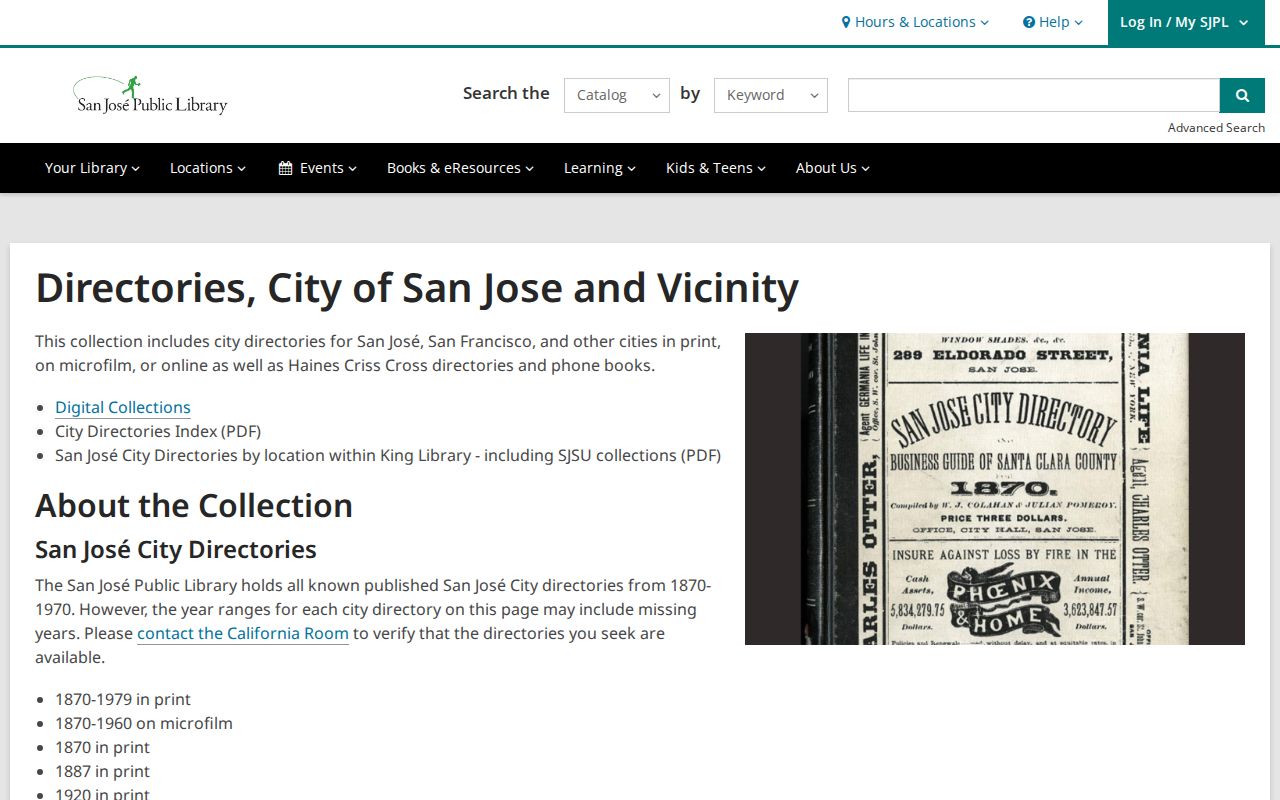
The photographed historical-directory source illustrates why a street number and a name index should be read as paired evidence.
Sunnyvale Reverse Directories by Street
Haines and Pacific Bell reverse directories are reported from the mid-1960s, with broader holdings and gaps. A reverse entry can suggest an occupant for a particular publication date. It may also show vacancy, an abbreviated given name, several people, a business, or a line that continues on another page. Compare the address spelling and number with the alphabetical volume.
Absence is not a clean negative. The needed year may be missing. A publisher may omit a person, a street may sit outside the printed boundary, or a number may have changed. Pair the reverse result with newspapers, yearbooks, census schedules, permits, and deeds. The historical city directory owns the collection reading; a current address lookup should only borrow the historical layer.
Tracing Sunnyvale Households Across Years
A useful trace moves from a known name and address to nearby years, then to an independent record. Census schedules are released after 72 years, so 1950 is the latest public population census as of 2026, while 1960 remains closed until 2032. Directory years do not need to match census years exactly. They need to bracket arrival, departure, or a change in household shape.
- Write down the name, street number, street name, city label, and target year.
- Read the alphabetical Sunnyvale city directory entry and its key, then check the reverse street section.
- Compare the next available volume and one earlier volume for the same address or name.
- Pair a 1940 or 1950 directory clue with the released census for names and relationships.
- Test the result against newspapers, yearbooks, a vital index, or a deed, keeping ownership separate from occupancy.
For a modern identity check, use a record that has a current date and a named custodian. An old directory can suggest a person but cannot certify present residence.
Where Sunnyvale Directory History Is Held
Sunnyvale Public Library at 665 W. Olive Avenue provides local-history help, newspapers, yearbooks, genealogy databases, and digital collections. Regular posted hours are Monday through Thursday 10 a.m. to 9 p.m., Friday and Saturday 10 a.m. to 6 p.m., and Sunday 1 to 6 p.m. SJPL’s California Room is the key stop for regional directory holdings. Confirm hours and shelf status before travel.
Sunnyvale’s digital archive holds more than 590 local historical images. Heritage Park Museum is developing a Local History Research Library and Archives and holds Murphy Family materials. Volunteers report work with Sunnyvale Standard volumes and city records, but no full online finding aid, exact directory list, or research fee was verified. For birth, death, and marriage index work, the County’s genealogy-services instructions identify the pre-1920 index-book route. The California State Archives catalog adds a state-level collection path.
The Sunnyvale Public Library local-history page is the best first route for collection help.
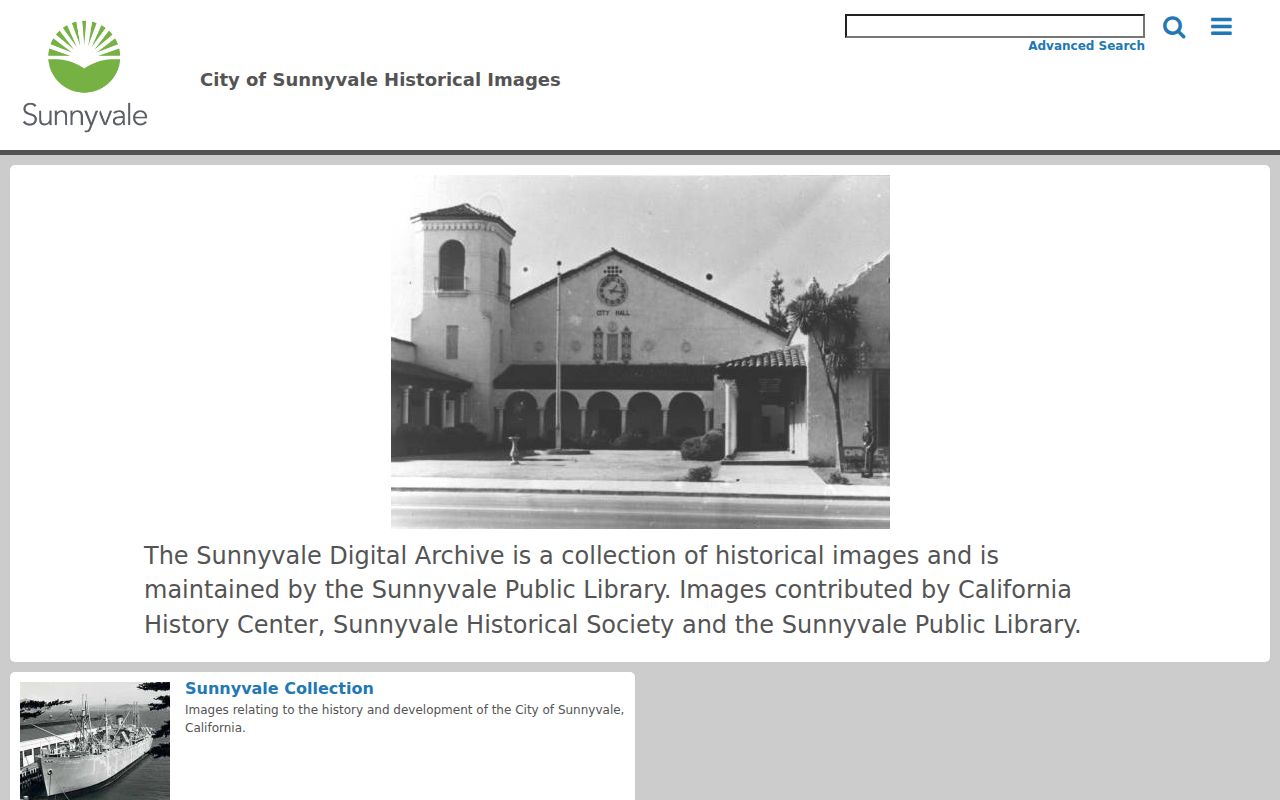
The library archive image shows the kind of curated local material that can fill a gap between directory years.
The Heritage Park Museum archive description adds a community-history lead, not a guaranteed public resident roster.
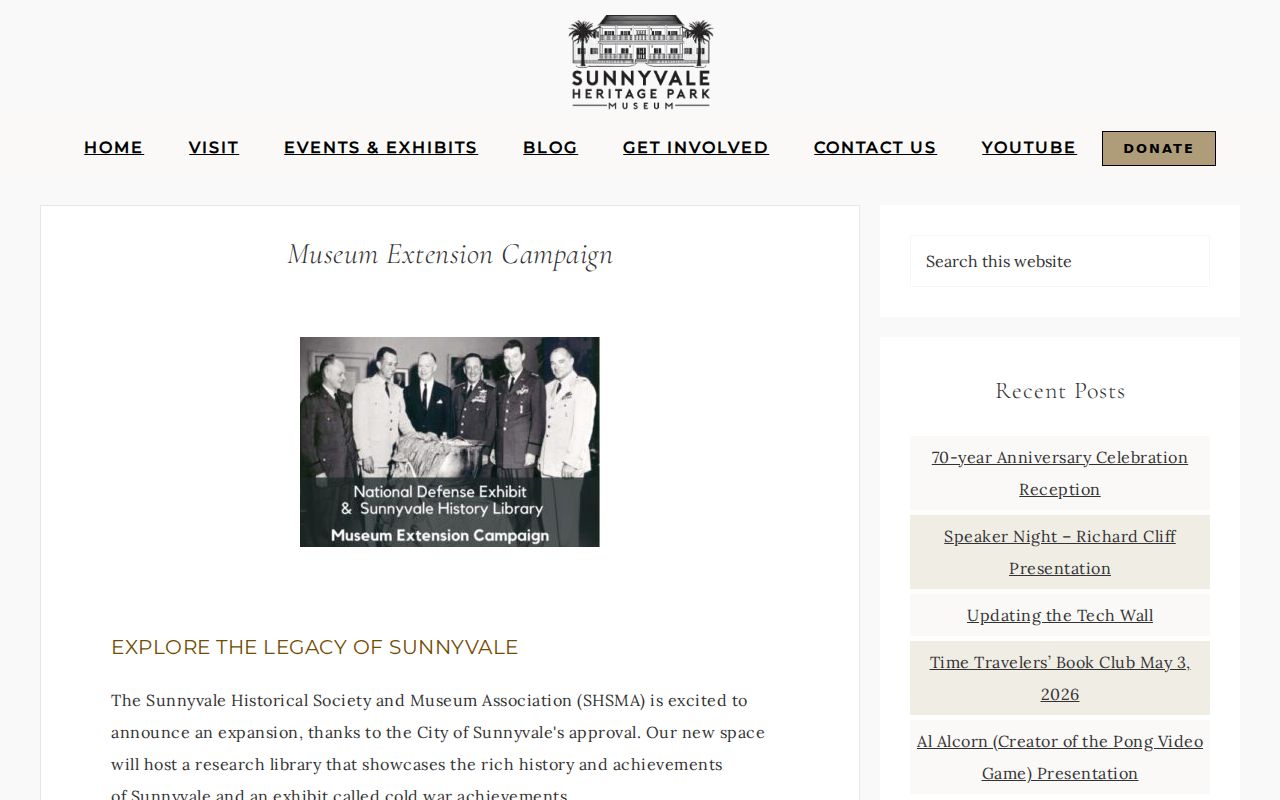
Use museum and library collections for context, then confirm a person or property through the record custodian that holds the underlying file.
Sunnyvale Newspapers and Yearbooks
The newspaper trail begins with the Sunnyvale Standard in 1908. Local papers from 1908 through 1963 are microfilmed, digitized, or searchable through the Sunnyvale Public Library, with a complete collection in the library. Later runs include the Sunnyvale Daily Standard and Mountain View Register Leader from 1963 to 1965, Standard Register Leader from 1966 to 1968, Sunnyvale Standard from 1968 to 1969, and Valley Journal from 1970 to 1979. Mercury News historical pages and the Sunnyvale Sun extend other periods.
Yearbooks and school material can confirm a class connection when a directory entry is thin. Obituaries can explain why a household disappears, while a newspaper can reveal a move, business, marriage, or civic event. Treat each as a lead with a publication date, not a current address claim.
For a wider Santa Clara Valley search, the California History Center at De Anza College keeps the Stocklmeir Library and Archives. Its posted research hours are Tuesday through Thursday from 9:30 a.m. to noon and 1 to 4 p.m., with Friday visits by appointment and a July and August closure; nonstudents and nonmembers are listed at $5 per day. SJSU and CSU Archives add institutional photographs and personnel-history leads, while the Sunnyvale Chamber directory is a business contact source rather than a household directory.
When a Sunnyvale Directory Needs a Deed
A directory entry becomes stronger when an address and year match a deed, map, or vital index. The County Clerk-Recorder holds official records from 1850 forward, but the remote index ended in 2018. The Assessor can supply a current transfer document number from a situs search; the Recorder then supplies the title record through its office research route. Legal descriptions and APNs help separate two streets or two people with the same name.
For the full modern address chain, use the Sunnyvale street directory. For a one-person question, use the Sunnyvale resident lookup. The city directory remains the historical shelf: useful, specific, and limited to what that publisher collected.