
How Sunnyvale Residents Are Found
Resident research in Sunnyvale works best as a chain. A known address leads first to the Santa Clara County Assessor's property search. The free result yields an APN, meaning assessor's parcel number, along with a recent transfer document number. It leaves out the assessee name. Take that number to the Clerk-Recorder, where a deed names the grantors and grantees. Your own voter registration can be checked through My Voter Status. For past households, the Sunnyvale Public Library holds city directories, reverse directories, newspapers, and yearbooks.
A name alone is a weak key here. Too many households, too many changed names. Pair the name with a date, a place, an APN, a case number, a license number, or a business entity number. A record might show a title party, a permit applicant, a voter's own status, or a historical listing. That still proves nothing about everyone at that address. The Sunnyvale residents directory grows strongest when two independent records point to the same person. The same holds for the same property.
- Write down the exact name, address, year, or parcel clue, including middle initials and alternate spellings already known.
- Use the Assessor or city GIS to anchor an address to its APN and jurisdiction.
- Carry the latest transfer document number to the Clerk-Recorder rather than expecting a remote name or street search.
- Use the court, voter, vital, license, business, or historical source that fits the question.
- Keep the source date and the negative results, then ask the custodian about a defined record that is not online.
Working in that order saves real time. It also keeps a single property clue from being mistaken for a full roster of who lived at an address.
Sunnyvale’s Records Offices
Sunnyvale records sit across city, county, and state desks. City Hall handles local administrative files and permits. It also covers council material, police records, and focused California Public Records Act requests. In San Jose, Santa Clara County keeps the deed and map index, property assessment, vital copies, and elections files. The county holds most trial-court records too. State portals fill in the rest. Licenses, business filings, voter self-checks, custody records, and unclaimed property all live there.
Each office answers a different question. The Assessor ties a situs, meaning property location, to an APN and a transfer reference. The Recorder supplies the document image and everyone named in it. The Registrar of Voters does not expose a public street roster through its self-service tool. Staff at the Clerk-Recorder, Superior Court, and library can explain access routes. They will not certify that two similarly named people are the same person.
Santa Clara County Clerk-Recorder
110 W. Tasman Drive
San Jose, California
408-299-5688
Santa Clara County Assessor
130 W. Tasman Drive
San Jose, California
408-299-5500
Santa Clara Registrar of Voters
1555 Berger Drive, Building 2
San Jose, California
408-299-VOTE
Hours and service rules shift. Confirm the route with the named custodian before any trip, especially when a copy, an appointment, or a public-terminal session is involved.
The Sunnyvale Assessor Result Is a Bridge
The Santa Clara County Real Property Search earns its place by handing over a starting key. It does not pretend to be a residents directory. Enter a simple situs address, an advanced address, or an APN. Accept the terms checkbox first. A result can include the APN, the latest transfer document number and its type, the transfer date, assessed land and improvement values, exemptions, and tax-rate jurisdictions. What it leaves out is deliberate. The public web result omits the assessee name and mailing address.
| Search field | Type and rule |
|---|---|
| Property address | Text or autocomplete; use the situs address, not a mailing address. |
| Terms checkbox | Required before the search can run. |
| Street number and name | Advanced address fields; street type, direction, and unit refine the match. |
| City | Required in advanced mode; select Sunnyvale for a Sunnyvale situs. |
| APN number | Search with or without dashes, such as 12345678 or 123-45-678. |
| Search | Runs the chosen address or APN mode after the terms step. |
The result acts as a bridge. The latest transfer number travels with you to the Recorder's office-only deed research system. Read the APN as a parcel key, never as a person's name. A homeowner exemption does not prove every household member owns or occupies the parcel.
For a visual view, the Assessor search interface displays the address and APN workflow. The public property-search page shows exactly this surface. The omitted owner field is an access limit built into the tool, not a search step you missed.
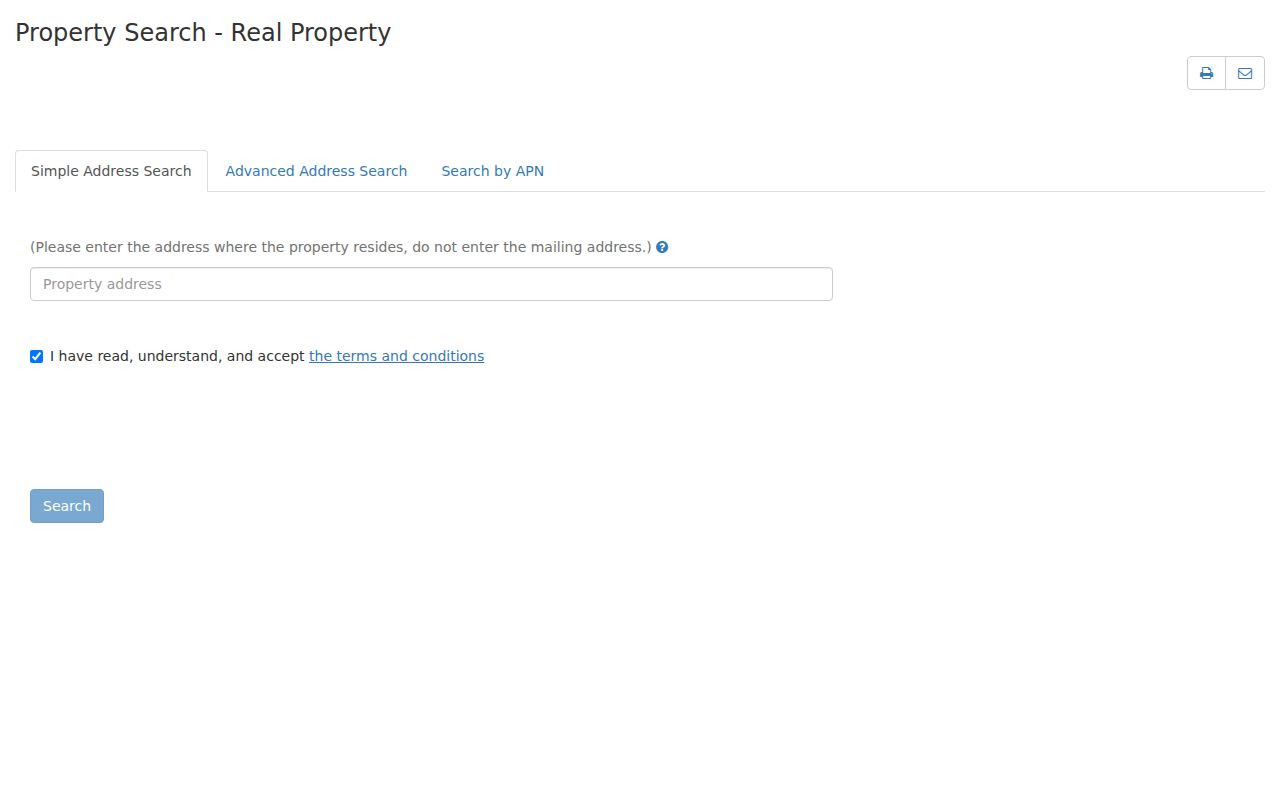
Treat the APN and transfer number as stable research keys, then verify names in the underlying custodian record.
Why Sunnyvale Deeds Leave the Web
Santa Clara County pulled its online official-record index offline on November 5, 2018. The deeds did not vanish. Records begin in 1850. From 1850 through 1980, they sit on Digital Reel. Records from 1981 forward are on public workstations at 110 W. Tasman Drive. The Recorder does not index property by street address. An address alone will not carry a copy request.
The local handoff is simple, if unusual for a digital city. Search the property by situs in the Assessor tool. Copy the APN and latest document number, and carry that key to the Recorder. A deed image may reveal buyer and seller, recording date, legal description, and a return address. To move backward, search the seller as an earlier grantee. Older work may need a year paired with a grantor, grantee, book, page, or document number.
Offline handoff. A remote miss in the deed index is expected. Keep the APN and instrument number, then ask the Clerk-Recorder for the correct workstation or Digital Reel route.
The Recorder office keeps weekday hours, Monday through Friday, 8 a.m. to 4:30 p.m. Busy workstation sessions may be capped at one hour. A mail copy request needs the recorder serial or instrument number. It can also use a book and page reference. A broad request to "find everyone" cannot replace a defined record search.
Current Sunnyvale Directory Sources
A current Sunnyvale residents directory is really several narrow lists. No single one rolls up every person at an address. What matters is knowing what each source actually identifies, and what a reader can only infer from it.
| Source | What It Can Identify | Keeper | Access |
|---|---|---|---|
| Real Property Search | APN, transfer reference, values, exemptions, tax areas | Santa Clara Assessor | Free web result; assessee name omitted |
| Official-record deed | Grantor, grantee, legal description, return information | County Clerk-Recorder | In-person index and image access |
| My Voter Status | A matching voter’s own registration and election information | California Secretary of State | Identity-matched self lookup |
| City permit or plan history | Project address and public applicant or contractor fields | Sunnyvale E-OneStop | Online search, kiosks, counter, or request |
| License or business filing | Professional, entity, agent, or practice connection | California agencies | Free indexes with board-specific limits |
A one-person question fits the Sunnyvale resident lookup. For a whole street, use the address-keyed Sunnyvale street directory, where the parcel and the deed chain sit in one place. The current directory idea holds up only while the source, the date, and the access boundary stay attached to the result. Strip those away and the entry stops being evidence.
What California Voter Status Confirms
My Voter Status works as a private self-check. It is no public resident search. The form demands a first name, a last name, a California driver license or ID, the last four digits of a Social Security number, and a birthdate. Only the matching voter sees registration and election details. No street entry yields a block roster. Those four identity checks are the whole point. They tie the result to one voter and block any reuse as an open block search. The regulated voter file is a different animal. Approved-purpose access can reach registration date, residence and mailing information, precinct, party preference, status, language, vote-by-mail status, and participation by election and method. Addresses, contact data, identifying data, and signatures stay protected outside the authorized process. Ballot choices never enter participation history. California Elections Code sections 2188, 2194, and 18109 govern the arrangement. Statewide file access costs $100, while a specific voter request runs $30. Per-application caps sit at ten requests and $100, with stated processing of 7 to 14 business days. For a personal check, the official My Voter Status lookup is the right door. For a street list, it is the wrong one.
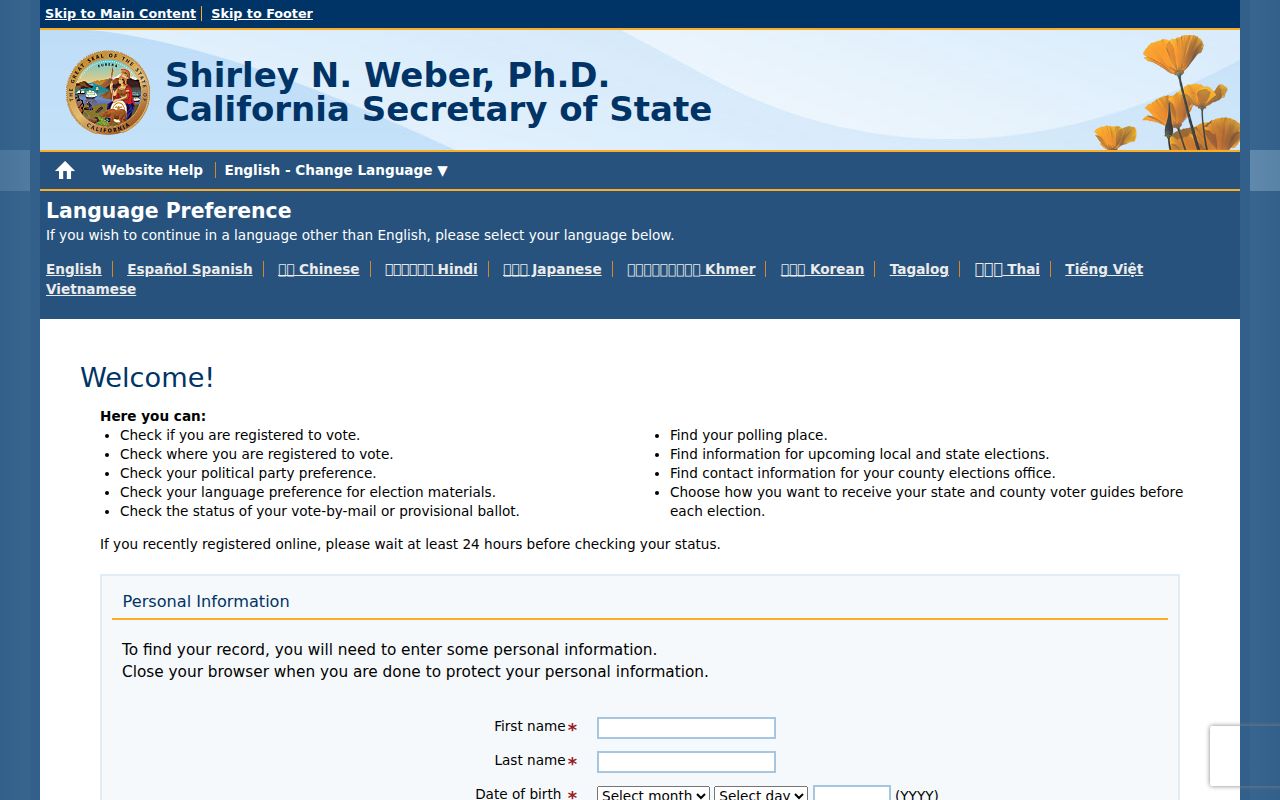
Those identity fields set the boundary. They keep the result personal to one voter and block any reuse as an open block directory.
Sunnyvale Court Records Need Name Checks
Sunnyvale matters land in Santa Clara Superior Court. The court's Case Information Portal offers four entry points: Case Number, Party, Business, and Filing Date search. Party search runs on first and last name. Business search takes a company name. Filing Date search spans no more than five days and may demand a case type. Case Number search accepts five to sixteen alphanumeric characters. Filing Date fields take MM/DD/YYYY format from Date From to Date To, and a generated case type can be required. Indexes can cover civil, small claims, probate, some family, traffic, local ordinance, and criminal matters. The court publishes no first-online year for every case type, so coverage varies. Pick the narrowest mode that answers the question. Open results may show case number and title, filing and disposition dates, status, type, related cases, party and counsel details, motions, orders, rulings, and scheduled events. Sealed, juvenile, adoption, and protected items stay closed. A web miss is not proof. A case can still exist at the courthouse. Court terminals and the clerk's records page come next. The Santa Clara Case Information Portal page shows the court-search surface itself, and it is a case index, not a complete copy of every filing.
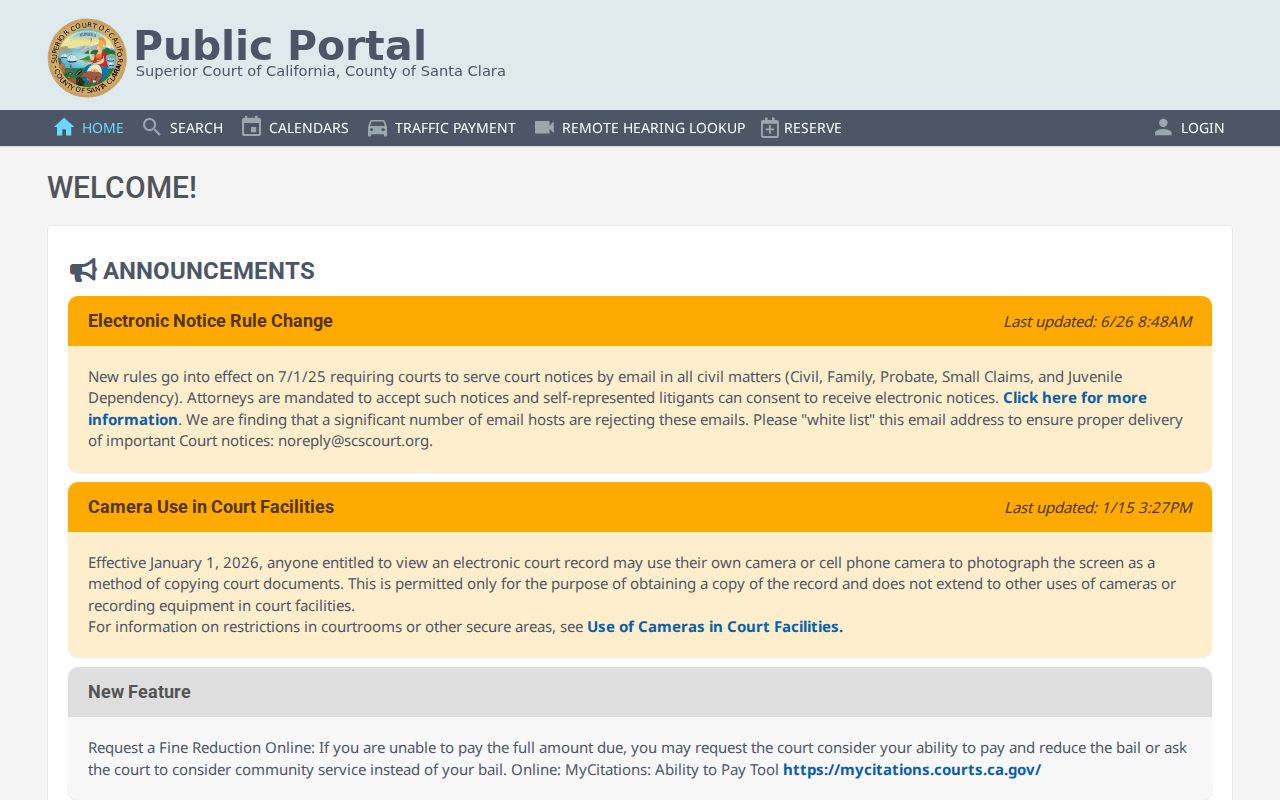
Match a court party to a date, a case type, or a property clue first. Only then treat the entry as the right person.
Sunnyvale Business and License Trails
A license or business filing confirms a public connection. It cannot turn a listing into a home. The California Department of Consumer Affairs search offers board or bureau, license type, license number, business name, first name, last name, and registry number. State Bar, contractor, medical, real-estate, and alcohol-license portals carry their own fields and public-action limits. Secretary of State bizfile is the entity trail. It searches by entity name or file number, with filters for entity type, status, initial filing date, and publicly traded disclosure. Detail pages may show formation date, status, jurisdiction, street and mailing addresses, agent for service, Statement of Information due date, and filed PDFs. The index promises no beneficial ownership list. Phone, email, subsidiaries, and every associated business stay outside it too. Treat it as one thread, not a full map.
| Official record path | Compiled-data category |
|---|---|
| Named custodian, stated field set, date, and source rules | May merge public and commercial data from several dates |
| License, entity, FBN, or filing number can narrow a namesake | May conflate people with similar names or stale addresses |
| Copy, correction, or verification route leads back to the keeper | May charge recurring fees and is not a substitute for a certified record |
Start with the California license search when a board or license clue exists.
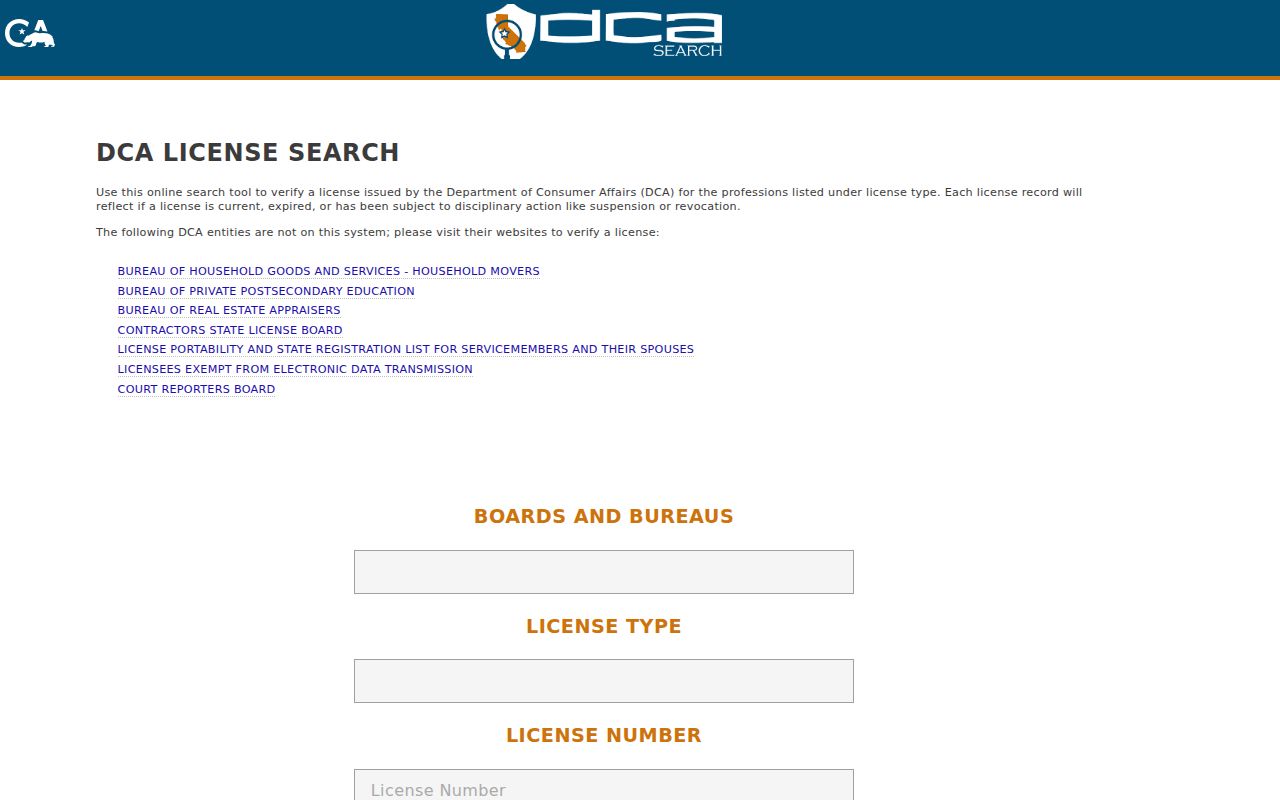
A namesake narrows fast by board and number. That beats a name-only match by a wide margin. For an entity lead, use California bizfile and keep the entity number with the result.
A business filing identifies a filing relationship. It never turns a business address into proof of personal residency.
Sunnyvale’s Four ZIP Geography
Sunnyvale reporting for 2025 counts 94085, 94086, 94087, and 94089 as the four primary residential ZIP codes. These run roughly north to south. ZIP 94088 also links to Sunnyvale processing, though USPS treats it as a unique route rather than a fifth residential zone. Keep three layers straight: postal routing, postal city labels, and municipal limits. They overlap, but they answer different questions for anyone tracing a Sunnyvale street directory entry.
City Hall sits at 456 W. Olive Avenue under 94086, and the main postal facility at 209 E. Java Drive anchors the Sunnyvale system. A 2012 USPS adjustment shifted notice and hold routing among facilities. Encinal Station handled specified 94085 pickups under that change. For a single ZIP, the USPS address lookup settles it fast. Then confirm jurisdiction through city GIS or an APN. The Sunnyvale ZIP code directory keeps those distinctions together.
Historical Sunnyvale Directory Shelf
Old directories for Sunnyvale live in a few well-known places. The California Room and the Santa Clara County Library hold the strongest collections. Standalone Sunnyvale volumes appear from roughly 1964 through 1968. Catalog copies exist for 1964 and 1966. Confirm the 1968 volume before making the trip. Earlier years fall under San Jose and Santa Clara County titles. Their runs cover 1909 to 1912, 1914, 1917 to 1920, and 1922 to 1937. Some grids call the town “Sunnyvale, formerly Encinal,” so search the old place names too.
Reverse and criss-cross directories sort entries by street instead of name. Newspapers stretch from the 1908 Sunnyvale Standard into later regional collections. The library adds yearbooks, photographs, oral histories, and genealogy databases. A directory entry might point to an occupant or a spouse. It might also list an occupation or a property mark for the year it was published. It proves nothing about where someone lives now. For the full collections, see the Sunnyvale city directory book. It explains how to read them.
Heirs, Probate, and Sunnyvale Property
An heir question usually spans two record systems. Probate and recorded property together can build a lawful, documented trail. Search the Superior Court by party name and spot the probate case. Then request public petitions, wills, letters, inventory and appraisal, notices, or the final distribution when the access rule permits. Compare names and legal descriptions against recorded deeds. A decedent’s property file may tie a petitioner or personal representative to a parcel. Even so, the court file and the deed each carry their own limits.
The useful match is never a name alone. It is a name plus a case type. It may also involve a date, a parcel, a notice, or a recorded document. Leave sealed adoption and confidential court material alone. Do not expect a public office to build a new residents directory from scattered records.
Sunnyvale Record Terms to Know
Small terms shift what a search means. These distinctions keep a Sunnyvale residents directory question anchored to the record that can truly answer it.
- APN
- An assessor’s parcel number, used to connect a property result to maps and deed research.
- Situs address
- The physical location of a parcel. It is not automatically the owner’s mailing address.
- Grantor and grantee
- The grantor transfers an interest; the grantee receives it in a deed or related instrument.
- Index
- A catalog row that points to a record. It is not the same as the document image.
- Criss-cross directory
- A historical reverse directory arranged by address or street, often used beside an alphabetical volume.
Privacy Around Sunnyvale People Records
California records do not hand out personal data without limits. My Voter Status keeps its self-check behind identity fields. Safe at Home supplies a designated mailing address. It also provides confidential mail forwarding for eligible survivors and certain public-facing workers. Government Code protections bar online publication of some officials' home addresses. DMV files, utility records, delivery data, and account information are not a public directory. Anyone browsing cannot treat them as one.
The CCPA and CPRA give California residents rights of their own. A resident can ask a covered business to know, delete, or correct covered data. A resident can also stop the sale or sharing of it. The Delete Request and Opt-out Platform is called DROP. It lets a registered resident file one centralized request across registered data brokers. None of these rights erase a recorded deed. A court file held by a public custodian stands as well.
Lawful personal use. Use Sunnyvale records for family history, civic research, reconnecting, property curiosity, or personal safety awareness. Never use a record trail to stalk, threaten, harass, impersonate, or harm another person.
California stalking law sits in Penal Code section 646.9, and repeated harassing electronic communication can implicate section 653m. Check any lead with the agency that holds the record first.
For safety lookups, the county custody finder, the CDCR locator, and the Megan's Law site each carry different coverage and exclusion rules. A no-result may reflect a transfer, a release, a spelling variation, restricted disclosure, or a gap in the source itself. The Santa Clara inmate finder shown below serves as a portal reference, not a promise of a complete list.
Use custody and registry sources only for the lawful personal-safety purpose they allow, and confirm current details with the custodian.
Sunnyvale’s Record-Keeping Story
Sunnyvale took its name in 1901 and incorporated on December 24, 1912. The town grew from orchard subdivisions into industrial and later technology districts. So the record trail shifts by era. Murphy Station, Encinal, and Sunnyvale may all surface in an old directory search. The 1900 directory reportedly listed a single carpenter, Thomas Spencer. That is a hint early volumes ran thin rather than wrong.
That history is why APNs, legal descriptions, city-limit layers, and publication notes matter. A postal label is not a time machine. Test each address clue against the volume year. Check the city boundary at publication, and the deed or map record that carried the parcel forward.
Verify a Sunnyvale Directory Lead
Begin with the narrowest official record that fits the question. A property clue belongs with the Assessor and Recorder. A court clue belongs with the Superior Court. A personal voter question belongs with My Voter Status. A former household belongs with directories and newspapers. It also belongs with census schedules through 1950, then deeds or vital indexes. A business clue belongs with an entity or license number.
Set two independent records side by side, ones that did not copy from each other. Write down the date and the source. Record the search fields, and note any reason a result might be missing. When a result touches a real person, ask the custodian to confirm the record. Do not treat a Sunnyvale residents directory lead as final proof. That habit guards against namesakes, stale listings, and false certainty.